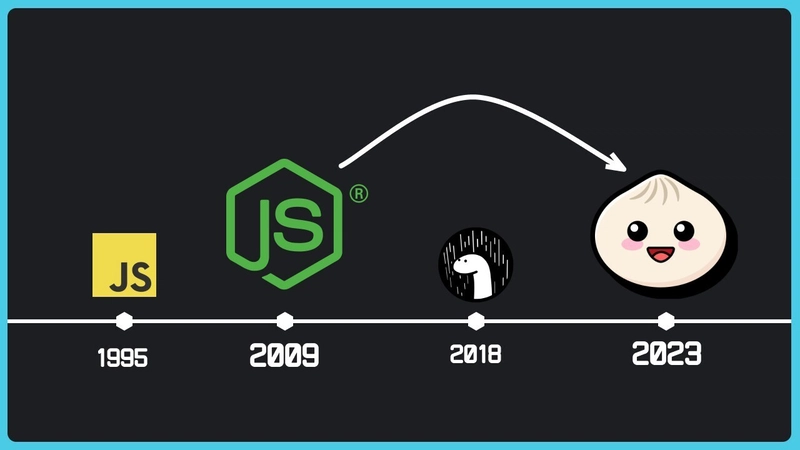
The landscape of server-side JavaScript has undergone a seismic shift over the last few years. For over a decade, developers relied heavily on Node.js as the de facto standard for executing JavaScript outside the browser. However, as modern web development requirements have evolved, the need for faster startup times, integrated tooling, and better TypeScript support has grown. Enter Bun News: the topic dominating conversations in 2025 as the runtime that aims to replace not just Node.js, but the entire toolchain associated with it.
While Node.js News continues to report on steady improvements and Deno News highlights security-first architectures, Bun has carved out a massive niche by focusing on one primary metric: speed. Built from scratch using the Zig programming language and utilizing JavaScriptCore (the engine powering Safari) rather than V8, Bun offers a drop-in replacement for Node.js that is significantly faster. But Bun is more than just a runtime; it is an all-in-one toolkit including a bundler, test runner, and package manager.
In this comprehensive guide, we will explore the architecture of Bun, its practical implementation in modern web stacks, advanced features like the Foreign Function Interface (FFI), and how it compares to the existing ecosystem. Whether you are following React News, Vue.js News, or Svelte News, understanding Bun is now critical for optimizing frontend and backend performance.
Section 1: Core Concepts and The “All-in-One” Architecture
To understand why Bun is generating so much buzz, we must look at the fragmentation of the JavaScript ecosystem. Historically, setting up a modern project required stitching together disparate tools: Webpack News or Rollup News for bundling, Jest News or Mocha News for testing, Prettier News for formatting, and npm or yarn for package management. Bun unifies these responsibilities.
The Performance Engine
Bun’s speed advantage comes from three main pillars: the Zig programming language (which allows for low-level memory control), the JavaScriptCore engine (optimized for faster startup times than V8), and a cohesive architecture where tools share internal data structures. This means no overhead from serialization between the runtime and the bundler.
One of the most immediate benefits developers notice is the native HTTP server implementation. Unlike Express.js News or Koa News running on Node, which require JavaScript layers to handle requests, Bun exposes a high-performance native API. Below is an example of how to set up a basic, high-performance HTTP server using Bun’s native capabilities.
// server.ts
// A high-performance HTTP server using Bun.serve
// This replaces the need for basic Express or Fastify setups for simple microservices
const server = Bun.serve({
port: 3000,
development: true, // Enables verbose error messaging
async fetch(req) {
const url = new URL(req.url);
// Native routing based on URL path
if (url.pathname === "/") {
return new Response("Welcome to Bun 2025!");
}
if (url.pathname === "/api/data") {
const data = {
message: "JSON response is incredibly fast",
timestamp: Date.now(),
runtime: "Bun"
};
return Response.json(data);
}
// Handling 404s
return new Response("Not Found", { status: 404 });
},
// Optional error handler
error(error) {
return new Response(`
console.log(`Listening on http://localhost:${server.port} ...`);
This code snippet demonstrates the simplicity of the API. There are no external dependencies required. This native implementation is often benchmarks faster than Fastify News or Hapi.js News setups on Node.js because the HTTP processing is handled closer to the metal.
TypeScript as a First-Class Citizen
For those following TypeScript News, Bun is a breath of fresh air. It treats TypeScript as a first-class citizen. You do not need ts-node, Babel News, or SWC News to transpile your code before running it. Bun executes .ts and .tsx files directly. This eliminates the configuration fatigue often associated with setting up environments for Next.js News or NestJS News projects.
Section 2: Implementation Details and Ecosystem Compatibility
A runtime is only as good as the ecosystem it supports. One of Bun’s strategic masterstrokes was aiming for complete Node.js API compatibility. This means most packages you read about in Angular News, Remix News, or Nuxt.js News will work out of the box with Bun.
Keywords: Responsive web design on multiple devices – Responsive web design Handheld Devices Multi-screen video Mobile …
Package Management Revolution
The bun install command is famously fast—often 20x to 100x faster than npm or yarn. It achieves this by using a global module cache and hard links, similar to pnpm but optimized further. For large monorepos often discussed in Turbopack News or Nx communities, this speed difference significantly reduces CI/CD pipeline times.
File I/O and Streams
Bun implements the standard Web APIs (Request, Response, ReadableStream), making it compatible with the “Edge” runtime philosophy seen in Cloudflare Workers. However, for file system operations, Bun provides the Bun.file() API, which is lazily loaded and significantly more performant than Node’s fs module.
Here is a practical example of reading and writing files, a common task when building CLI tools or processing logs—a topic often relevant to Electron News or Tauri News developers building desktop apps.
// file-ops.js
// Demonstrating the lazy-loading capabilities of Bun.file
const runFileOperations = async () => {
// 1. Writing to a file
// Bun automatically handles creating the file if it doesn't exist
const logData = `Log entry at ${new Date().toISOString()}\n`;
await Bun.write("app.log", logData);
// 2. Reading a file
// Bun.file returns a BunFile instance, it doesn't read the content yet (lazy)
const inputFile = Bun.file("input-data.json");
// Check if file exists before processing
if (await inputFile.exists()) {
// Parse JSON directly without an intermediate string allocation
const content = await inputFile.json();
console.log("User Data:", content.users);
} else {
console.warn("Input file not found, creating default...");
await Bun.write("input-data.json", JSON.stringify({ users: [] }));
}
// 3. Streaming a file to stdout (very memory efficient)
const bigLog = Bun.file("app.log");
const writer = Bun.stdout.writer();
// Direct stream piping
writer.write(await bigLog.arrayBuffer());
writer.flush();
};
runFileOperations();
This approach to File I/O is non-blocking and optimized for low memory overhead, which is crucial when dealing with large datasets or high-throughput logging systems often found in AdonisJS News or Meteor News applications.
Section 3: Advanced Techniques and Built-in Tooling
In 2025, the “Bun vs. The World” narrative is driven by its built-in tooling. Developers are increasingly tired of “configuration hell.” By integrating a test runner and a database client directly into the runtime, Bun simplifies the stack.
Native SQLite Support
While PostgreSQL and MongoDB remain popular, SQLite has seen a resurgence for edge computing and embedded applications. Bun includes a native, high-performance SQLite client (`bun:sqlite`). This eliminates the need for dependencies like `better-sqlite3` and offers faster query execution. This is particularly exciting for developers following Lit News or SolidJS News who are building local-first applications.
// database.js
import { Database } from "bun:sqlite";
// Initialize database (creates file if missing)
const db = new Database("mydb.sqlite");
// Create table - Synchronous execution is safe in SQLite due to its speed
db.query(`
CREATE TABLE IF NOT EXISTS developers (
id INTEGER PRIMARY KEY AUTOINCREMENT,
name TEXT,
framework TEXT
)
`).run();
// Prepare a statement for insertion (Prevents SQL injection)
const insertDev = db.prepare("INSERT INTO developers (name, framework) VALUES ($name, $framework)");
// Transaction support is built-in and incredibly fast
const insertMany = db.transaction((devs) => {
for (const dev of devs) {
insertDev.run(dev);
}
});
// Execute transaction
insertMany([
{ $name: "Alice", $framework: "React" },
{ $name: "Bob", $framework: "Svelte" },
{ $name: "Charlie", $framework: "Vue" }
]);
// Query data
const query = db.query("SELECT * FROM developers WHERE framework = $framework");
const reactDevs = query.all({ $framework: "React" });
console.log("React Developers:", reactDevs);
The Built-in Test Runner
Testing is a cornerstone of reliable software. Historically, configuring Jest News, Jasmine News, or Karma News required significant setup. Recently, Vitest News gained popularity for its speed, but Bun takes it a step further. bun test is a Jest-compatible test runner built into the runtime. It supports snapshots, mocking, and coverage out of the box.
This native integration means tests run instantly. There is no overhead of spinning up a separate Node process or transpiling TypeScript files. For teams using Cypress News or Playwright News for E2E testing, Bun can serve as the fast backend server during these test runs, speeding up the overall CI pipeline.
Keywords: Responsive web design on multiple devices – Responsive web design Laptop User interface Computer Software …
// math.test.ts
import { describe, expect, test, beforeAll } from "bun:test";
const add = (a: number, b: number) => a + b;
describe("Math Logic", () => {
beforeAll(() => {
console.log("Setting up test environment...");
});
test("addition works correctly", () => {
expect(add(2, 2)).toBe(4);
});
test("floating point precision", () => {
expect(add(0.1, 0.2)).toBeCloseTo(0.3);
});
// Async testing is native
test("async operations", async () => {
const result = await Promise.resolve(10);
expect(result).toBe(10);
});
});
Section 4: Best Practices and Optimization in 2025
Adopting Bun requires a shift in mindset. While it is highly compatible with Node.js, simply lifting and shifting a legacy application might not yield all performance benefits. Here are key strategies for maximizing Bun’s potential.
Leveraging Macros and FFI
Bun supports Macros, which allow you to run JavaScript functions at bundle-time and inline the results into your code. This is a powerful optimization technique often discussed in Babel News circles but is now native. Furthermore, Bun’s Foreign Function Interface (FFI) allows you to call libraries written in Rust, C++, or Zig directly from JavaScript with very low overhead. This is a game-changer for performance-critical tasks like image processing (relevant to Three.js News, Babylon.js News, or PixiJS News).
Framework Selection
While Bun works with Express, it is recommended to use frameworks designed to leverage Web Standards and Bun’s native HTTP APIs. Frameworks like ElysiaJS or Hono are optimized for Bun and provide significantly better throughput. If you are building a full-stack app, the Next.js News and Remix News communities have provided adapters to ensure these meta-frameworks run smoothly on Bun.
Linting and Formatting
Even though Bun is an all-in-one tool, the ecosystem around code quality remains robust. You should still integrate ESLint News for static analysis. However, for formatting, while Prettier News is standard, Bun is experimenting with internal formatters. Always ensure your bun.lockb (binary lockfile) is committed to version control to guarantee deterministic installs across your team.
Keywords: Responsive web design on multiple devices – Banner of multi device technology for responsive web design …
Common Pitfalls
Be aware that while compatibility is high, it is not 100%. Some specific Node.js APIs related to advanced streams or specific C++ addons might not work. Always check the compatibility table. Additionally, tools that rely heavily on V8-specific debugging protocols might behave differently. If you are migrating a legacy app using jQuery News era build tools (like Gulp News or Grunt News), you may find it easier to rewrite the build scripts in Bun rather than trying to make the old plugins work.
Conclusion
As we navigate through 2025, Bun News continues to highlight the runtime’s maturity and stability. It has evolved from an experimental project into a robust foundation for modern web development. By unifying the bundler, runtime, test runner, and package manager, Bun simplifies the developer experience significantly.
Whether you are building microservices with NestJS News, creating interactive frontends with Alpine.js News or Mithril.js News, or developing cross-platform apps with Ionic News and Capacitor News, Bun offers a compelling argument for migration. The performance gains in startup time and CI/CD execution alone are worth the investment.
The battle between Node.js, Deno, and Bun drives innovation across the entire JavaScript ecosystem. However, Bun’s approach to providing a complete, high-performance toolchain out of the box positions it uniquely for the future. Start by experimenting with small utility scripts or internal tools, and you will likely find yourself reaching for Bun for your next major project.
Chiamaka is a vibrant voice in the JavaScript community, specializing in Svelte and modern web performance. She loves demystifying complex topics through engaging talks and articles, and can often be found debugging live code with a perfectly brewed cup of chai.